I play go now and then. I'm no master. But the game ruined chess for me as a business metaphor.
The chess trap
Most of us were raised on the chess logic. Confrontation. Find the weak piece and attack it. Sacrifice in the process. Win by destroying the other side.
Now look at a chess board at the end of a hard game. A few pawns. Two shredded armies. One king cornered. The winner stands in the ruins and calls it victory.
So, was it worth it?
I've spent 25+ years in business. And I've watched companies play exactly this game: price wars, talent poaching, copy-paste product launches, endless fights over one more point of market share. Whoever survives the next shareholder meeting wins. That isn't a strategy. That's PowerPoint victory for corporate guys and flashy social media post for startup CEOs.
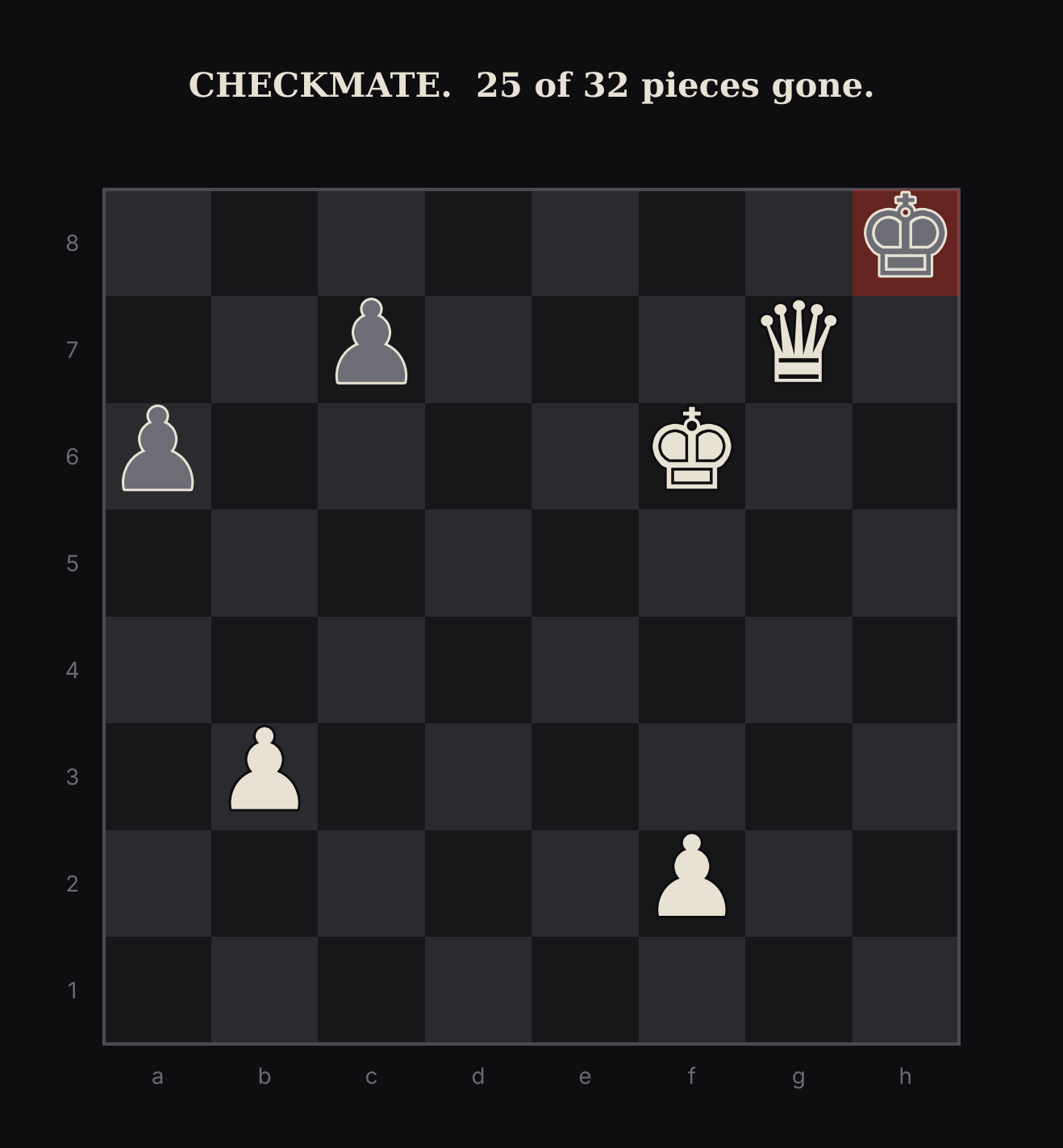
Checkmate. But 25 of 32 pieces are gone...
Go asks a different question
The game of go is older than most of the management theories we quote. It was born in China, approx. 3,000—4,000 years ago, and reached Japan about 1,500 years ago. The Japanese took it so seriously that in 1612 the government set up state-backed go schools, and the game has carried a reputation as strategy training for business and politics ever since.
In the game of go, there is no king to kill. Two players place stones on a 19×19 grid, one move at a time. The goal is not to destroy the opponent. It's to control more of the board than they do.
Your opponent is allowed to build. They get their own zones. They just need to end up with less than you.
Yes, stones get captured in go too. But capture is a tool, never the point. The player who hunts stones — while the other quietly claims the rest of the board — loses often badly when points are counted. And every sacrifice is priced against the whole board, not against one stone.
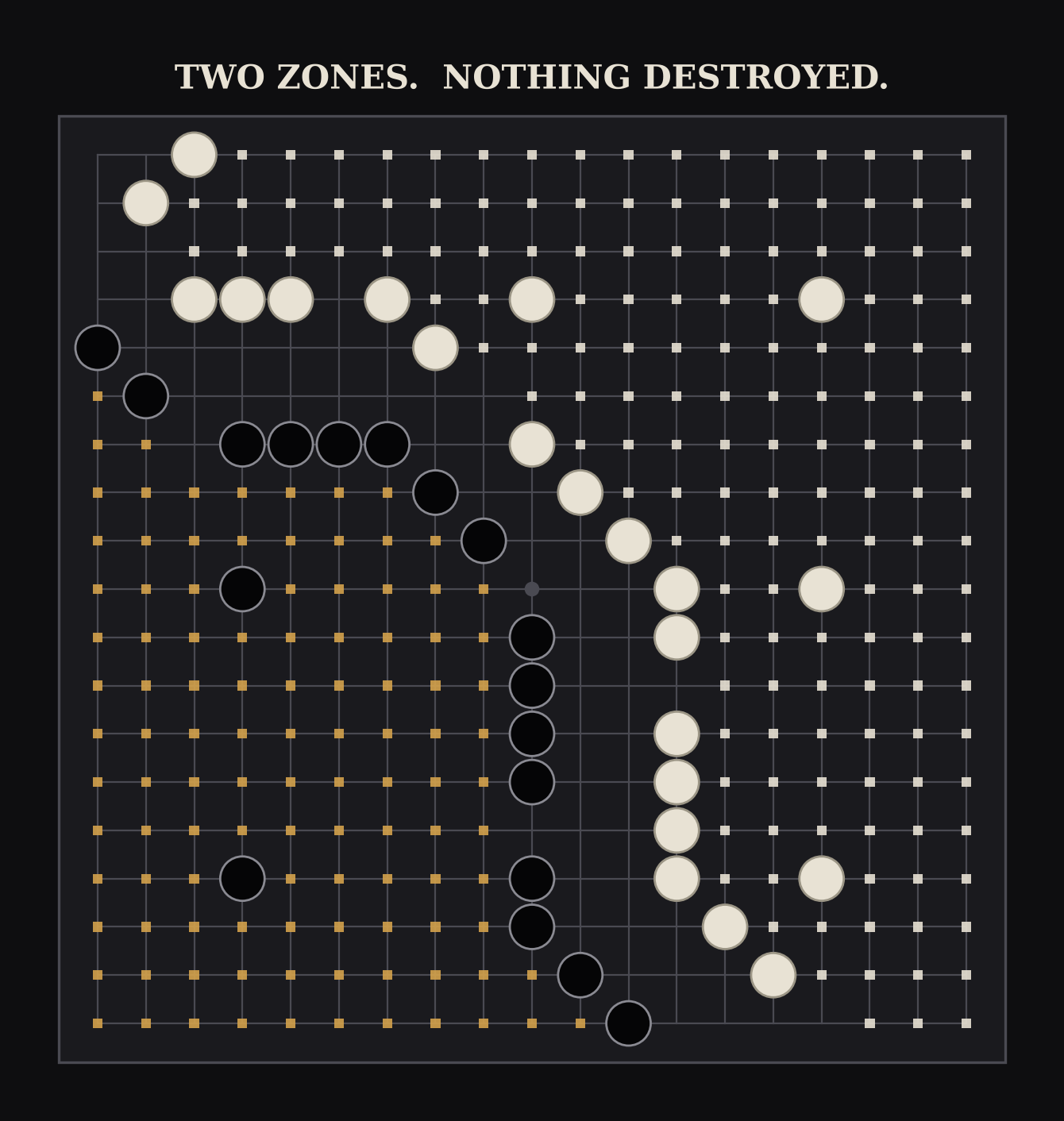
Two zones. Nothing destroyed…
The board is bigger than your problem
Chess has 64 squares. Go has 361 intersections. That large scale forces you to think long-term and in context. You can't stare at one fight. Win a corner — and you may lose the whole game. Give up a corner on purpose — and you may win it.
Go players even have a word for walking away from a local fight to play elsewhere: tenuki. The move that matters is often not where the current heat burns.
A CEO stuck in growth is usually staring at one corner. A competitor's price under-cut. One big client tender. One quarter numbers. Meanwhile — the board is much larger.
Five go moves for your business
Count influence, not kills. Where do you shape the market (brand, partners, channels, standards) rather than where did you beat a competitor?
Let competitors have a corner. You don't need to win everywhere. Walk away from fights that cost more than the land is worth.
Sacrifice stones on purpose. A product line, a client, a fancy project that drains more than it protects. Cut it — and spend the tempo elsewhere.
Play for the sequence. Today's move should make tomorrow's move stronger. If it only wins next week — it's the chess mindset.
Ask what the biggest move on the board is. Not the loudest one. The biggest.
Stuck? Change the game
If your market is brutal or your growth has flatlined, chances are you're playing chess on a go board. You win the fights — but lose the ground.
This is the conversation I have with founders, owners and CEOs: step back, look at the whole board, decide where the next stone goes.
If that sounds like your situation, book a free call and let's look at your board together…